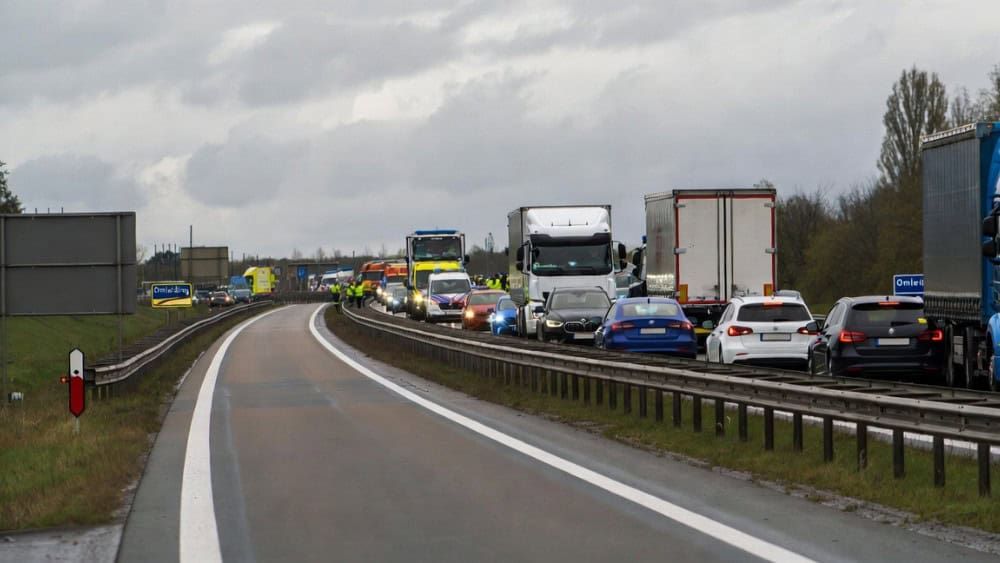
No Hospitalization After A28 Zwolle Car-Truck Crash: A Remarkable Outcome
In a recent and concerning incident on the A28 near Zwolle, a car and a truck were involved in a significant collision. While the car sustained extensive damage, spinning into the guardrail with all airbags deployed, a particularly fortunate detail emerged from the scene: despite the severity of the crash, all involved individuals were checked by ambulance personnel on site and remarkably, no one required hospitalization. This positive outcome, after what could have been a far more tragic event, highlights the role of modern vehicle safety features and swift emergency response.
The incident, which occurred on the Monday evening, quickly drew attention from emergency services and commuters alike. As news of the Ongeval A28 Zwolle vandaag spread, initial concerns for potential serious injuries were high given the nature of truck-car collisions. The ultimate confirmation that no one was transported to the hospital offers a rare silver lining in what is typically a grim reporting category.
The A28 Zwolle Incident: A Close Call Near the IJsselbrug
The collision unfolded around 21:45 on a Monday evening on the A28 highway, specifically on the lanes heading towards Amersfoort, just before the iconic IJsselbrug. Details indicate that a passenger car and a large truck came into contact under circumstances that are still being investigated. The impact caused the car to spin violently, eventually coming to a halt against the guardrail, severely damaged. The sight of the crumpled vehicle and deployed airbags immediately signaled a high-impact event, prompting a rapid response from local emergency services.
Ambulance crews were on the scene swiftly, assessing the occupants of both vehicles. Despite the dramatic visual evidence of the crash – the car was described as "zwaar gehavend" (heavily damaged) – their assessments thankfully concluded that no injuries warranted further medical treatment at a hospital. This outcome is a testament to the robust safety engineering in modern vehicles, where features like multiple airbags and reinforced chassis designs are crucial in mitigating the force of impact on occupants. After the initial checks, the damaged car was towed away, and the affected lanes, which had been temporarily closed for emergency operations and recovery, were subsequently reopened to traffic.
The exact cause of this unknown cause A28 Zwolle car-truck accident near IJsselbrug remains under investigation. While the immediate focus was on the welfare of those involved, authorities will now look into factors such as driver behavior, road conditions, and vehicle malfunctions to prevent similar incidents in the future. Understanding the root cause is vital for enhancing road safety for everyone.
The Significance of "No Hospitalization" in Highway Crashes
When reporting on highway accidents, the phrase "no hospitalization" is often a beacon of relief. In a landscape where serious injuries or fatalities are all too common, particularly in collisions involving heavy goods vehicles, such an outcome is genuinely remarkable. Consider, for instance, other recent incidents like the one on the A58 near Goes, where a collision between a tank truck and a passenger car led to at least one occupant being transported to the hospital and an additional hazard of a leaking substance from the truck. This stark contrast underscores the gravity that could have been and highlights the fortunate turn of events on the A28.
Several factors likely contributed to this positive result in Zwolle:
- Vehicle Safety Features: Modern cars are equipped with advanced safety systems, including a multitude of airbags, crumple zones designed to absorb impact energy, and robust occupant protection cells. These technologies play a critical role in shielding occupants during a collision.
- Impact Dynamics: The angle, speed, and point of impact can significantly influence the severity of injuries. It's possible that the specific dynamics of this collision, while causing extensive damage to the vehicle, allowed the occupants to escape with only minor trauma.
- Swift Emergency Response: The rapid arrival of ambulance personnel meant immediate assessment and care could be provided, potentially preventing escalation of minor injuries or providing critical reassurance.
- Luck: Sometimes, despite all scientific and engineering efforts, an element of chance plays a role in the outcome of such high-stress events.
For drivers, knowing that these safety systems work as intended can be reassuring, but it should never replace vigilance and adherence to traffic laws. Every accident, regardless of outcome, serves as a reminder of the inherent risks on our roads.
Understanding Truck and Car Collisions: Risks and Prevention
Collisions between passenger cars and large trucks are inherently dangerous due to the vast differences in size, weight, and stopping distances. Even at moderate speeds, the sheer mass of a truck can result in catastrophic damage to a smaller vehicle, as vividly demonstrated by the A28 Zwolle collision: car severely damaged by truck. Preventing such incidents requires a concerted effort from both truck and car drivers.
Tips for Driving Safely Near Trucks:
- Be Aware of Blind Spots: Trucks have large blind spots on all four sides. If you can't see the truck driver in their side mirror, they likely can't see you. Avoid lingering in these zones.
- Maintain Ample Following Distance: Trucks require significantly more time and distance to stop than cars. Give them plenty of room, especially in adverse weather conditions.
- Pass Safely: When passing a truck, do so quickly and on the left. Ensure you have enough space to clear the truck completely before merging back into the lane. Never cut off a truck.
- Anticipate Wide Turns: Trucks often need extra space to make turns, especially right turns. Do not try to squeeze in beside a truck that is signaling a turn.
- Avoid Distracted Driving: Any form of distraction can be deadly when sharing the road with large vehicles. Keep your focus on driving.
For truck drivers, maintaining vehicle health, managing fatigue, and adhering to load limits are crucial. For all drivers, defensive driving – anticipating potential hazards and being prepared to react – is the best defense against unforeseen incidents on busy highways like the A28.
Navigating Road Incidents: What to Do and How to Stay Safe
Encountering a road incident, whether as a direct participant or an eyewitness, can be a stressful experience. Knowing how to react can significantly improve safety and facilitate emergency response.
If You Are Involved in an Accident:
- Ensure Safety: First and foremost, check for injuries. If possible and safe, move your vehicle to the side of the road to prevent further collisions.
- Activate Hazard Lights: Turn on your hazard lights immediately. If safe, place a warning triangle behind your vehicle.
- Call Emergency Services (112 in the Netherlands): Report the accident, describe the location accurately, and provide details about any injuries.
- Exchange Information: If able, exchange insurance and contact information with the other party.
- Document the Scene: Take photos of vehicle damage, road conditions, and the accident scene for insurance purposes.
- Cooperate with Authorities: Provide accurate information to police and emergency personnel.
If You Witness an Accident:
- Prioritize Safety: Do not put yourself or others in danger. If you can safely stop and assist, do so. If not, call emergency services immediately.
- Report Accurately: Provide clear details to 112, including location, type of vehicles, and apparent injuries.
- Avoid Rubbernecking: Distracted driving by onlookers can cause secondary accidents. Focus on the road ahead.
Traffic information services like ANWB in the Netherlands are invaluable resources for staying updated on road conditions, congestion, and diversions resulting from incidents. Checking these before travel can save significant time and stress, helping you avoid affected routes like the A28 near Zwolle during peak incident times.
Conclusion
The Ongeval A28 Zwolle vandaag serves as a powerful reminder of the unpredictable nature of highway travel. While the severe damage to the car underscored the inherent dangers of car-truck collisions, the fact that no one required hospitalization is a truly positive and noteworthy outcome. This fortunate turn of events highlights the advancements in vehicle safety technology and the efficiency of our emergency services.
Ultimately, every driver shares the responsibility for road safety. By understanding the risks, practicing defensive driving techniques, and knowing how to respond effectively to incidents, we can all contribute to safer roads for everyone, minimizing the likelihood of serious injury in future events on critical routes like the A28.